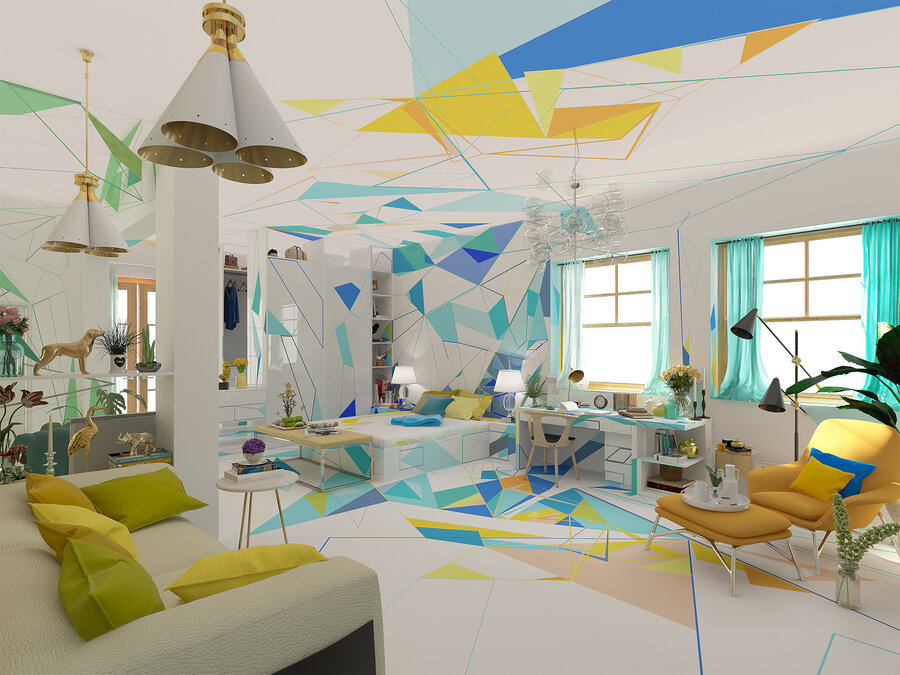
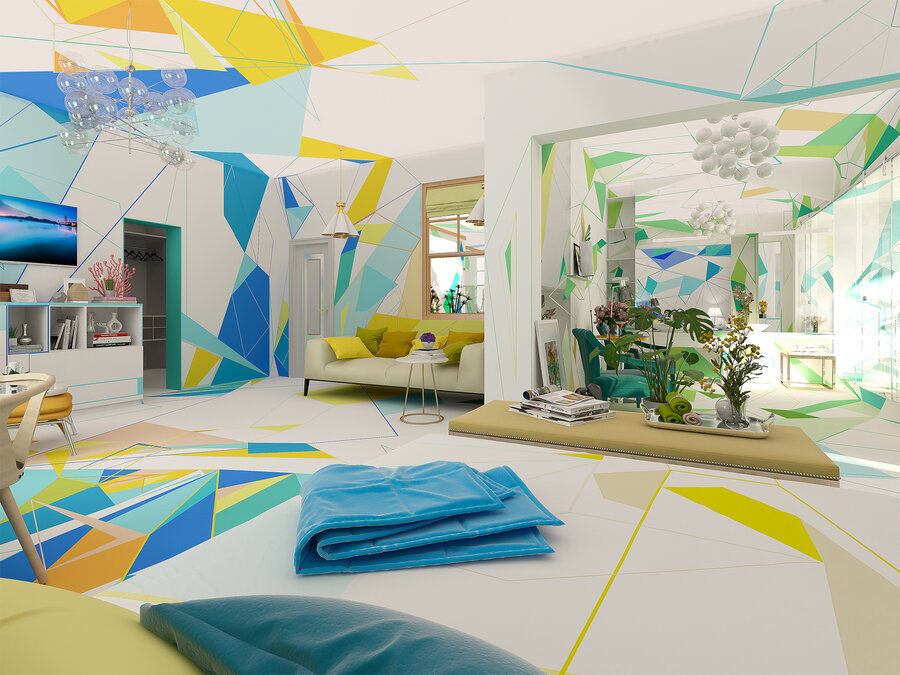
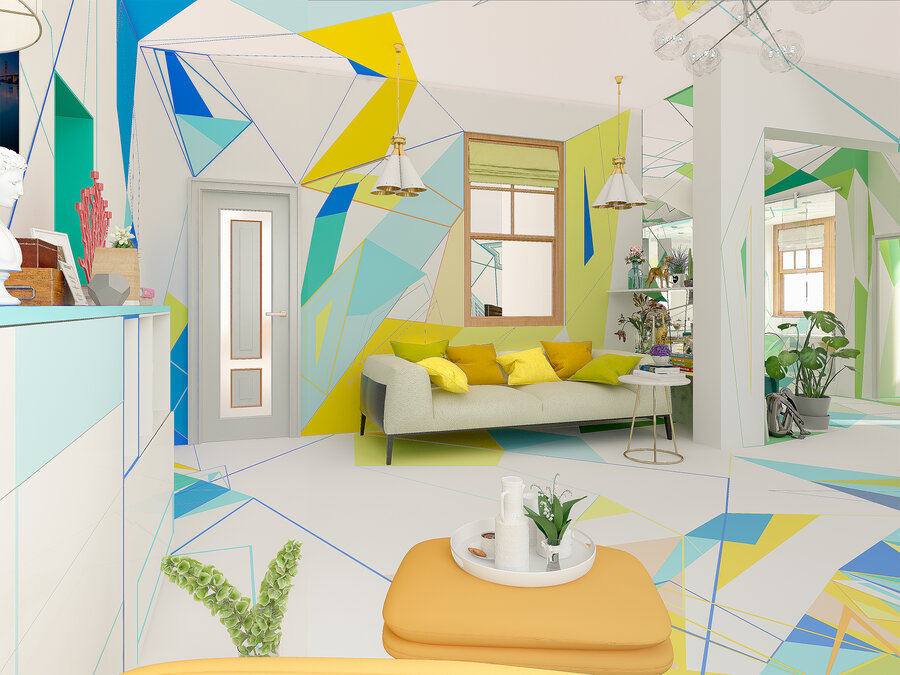
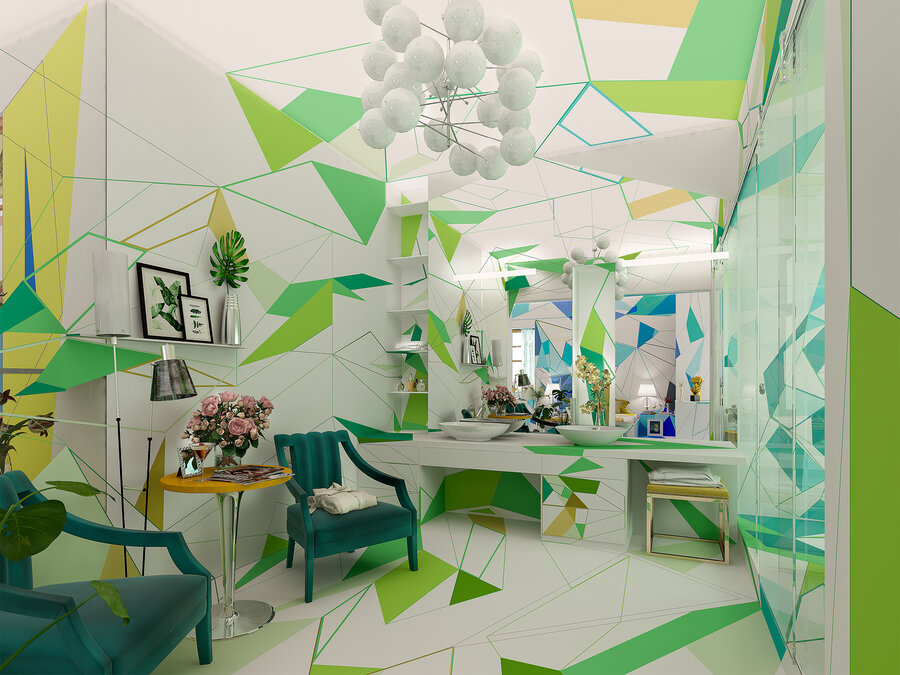
A house is a long time. A garden is a single minute.This is a family house that leads its owners, gently and without argument, into the Moment of Now.Its name belongs to Claude Monet, who was as much a gardener as a painter, and who learned from his own flowers and his own water that nothing is ever painted twice. The light moves. The pond, which is only a mirror, becomes another sky.A garden is the most private of rooms. It asks for nothing but attention. In it there are many shapes and many colors, none of them in a hurry, and a person may simply watch, and rest, and dream, until the thought that circled the mind all day grows tired and settles, and the buzzing falls quiet.So here the forms and the colors keep the eye gently occupied, the way ripples keep a pond awake.The body and the mind are given leave to rest.The soul and the spirit stay awake.This is all a garden has ever done, and it is what this house does.To live here is to look, and to be, for a minute, exactly where you are.
320Square meters
2Levels
3Magazine covers
What this house tests
Garden of Impressionist is a study before it is a style: a house organised by color and by the hour of the day, with the walls left almost silent. It asks three questions.
Can color divide a home?A shape that runs across floor, wall and ceiling marks a place without closing it.
Can a room be tuned to its hour?Each room takes the light of the time it is used: green for waking, yellow for noon, amber for dusk, blue for night.
Can the eye do the mixing?Small touches of pure color, set side by side, blend at a distance. The person in the room finishes the picture.
The answers are the five rules at the end of the house.
7:35Le Havre, 13 November 1872.
First, there was a minute
A grey harbor, a few rowing boats, an orange sun the size of a coin. Claude Monet painted it from a hotel window and called it Impression, Sunrise. For a century nobody could say which morning it was. Then astronomer Donald Olson of Texas State University went looking: old photographs of the hotel, the position of the sun, tide tables, weather records, even the direction of the smoke. His conclusion, adopted by the Musée Marmottan, was that the most probable minute was about 7:35 a.m. on 13 November 1872.1
Two years later the canvas hung in a photographer’s studio on the boulevard des Capucines, and a critic named Louis Leroy mocked its title, impression, as a joke. The painters kept the word.2
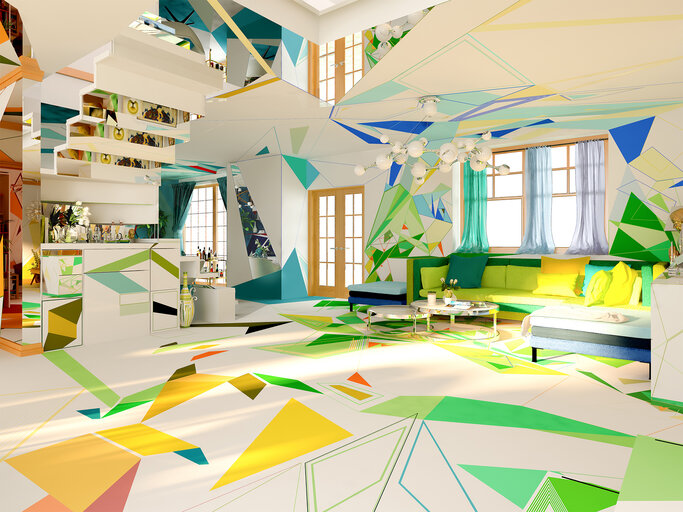
A whole movement was named after one minute. This house keeps the habit: seven rooms, seven minutes of one day, each with its own light.
Squint, and the house does what the critic complained about. It dissolves into impressions.
Two more stories from Giverny
A garden made to be painted
In the 1890s Monet asked permission to divert a branch of the river Epte into a pond beside his house. The neighbors feared the exotic plants would poison the water. He got his permission and painted that pond for the rest of his life. A garden, for him, was a room built to be looked at.4, 5
The garden that changed color
Cataracts were diagnosed in 1912 and clouded his eyes for a decade, and his late bridges burned orange and red. After an operation in 1923 the world came back too blue.3, 4 Which garden was true? He painted both. Look for them at dusk in the library and at night in the master bedroom.
Three ideas to carry through the house
Impression
What the eye catches before the mind names it. A harbor at sunrise, a lime-green sofa at noon.
Broken color
Small touches of pure color placed side by side instead of mixed on the palette. Every triangle on these floors is one touch.
Optical mixing
From a distance the eye blends the touches into one new color. Narrow your eyes and see it happen.
The house, hour by hour
08:00
Waking · Level 1
Entry and kitchen
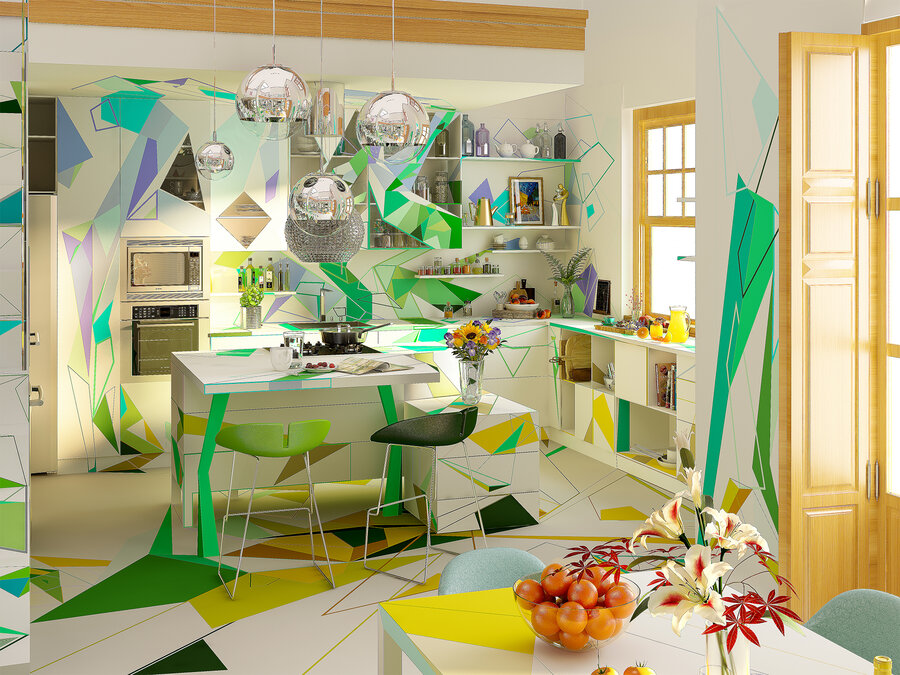
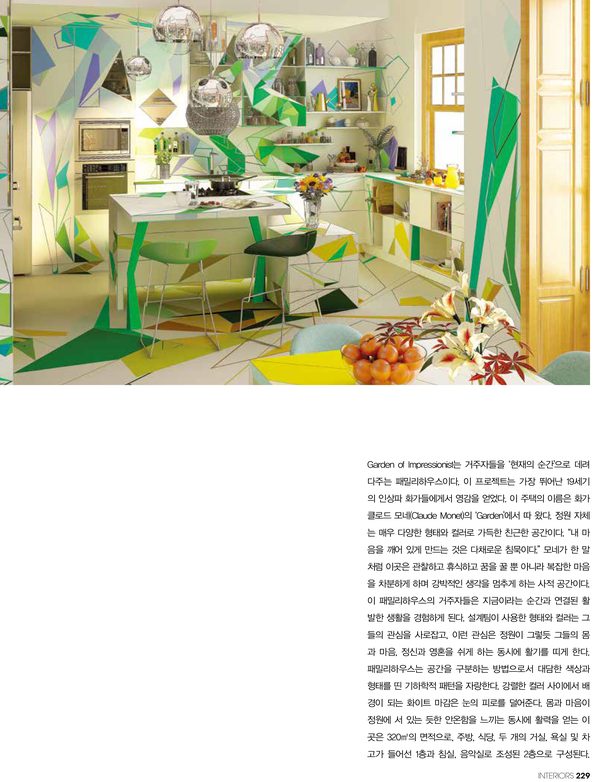
Green first. Then yellow. Then the door.The sunflowers are loud. The oranges are not.
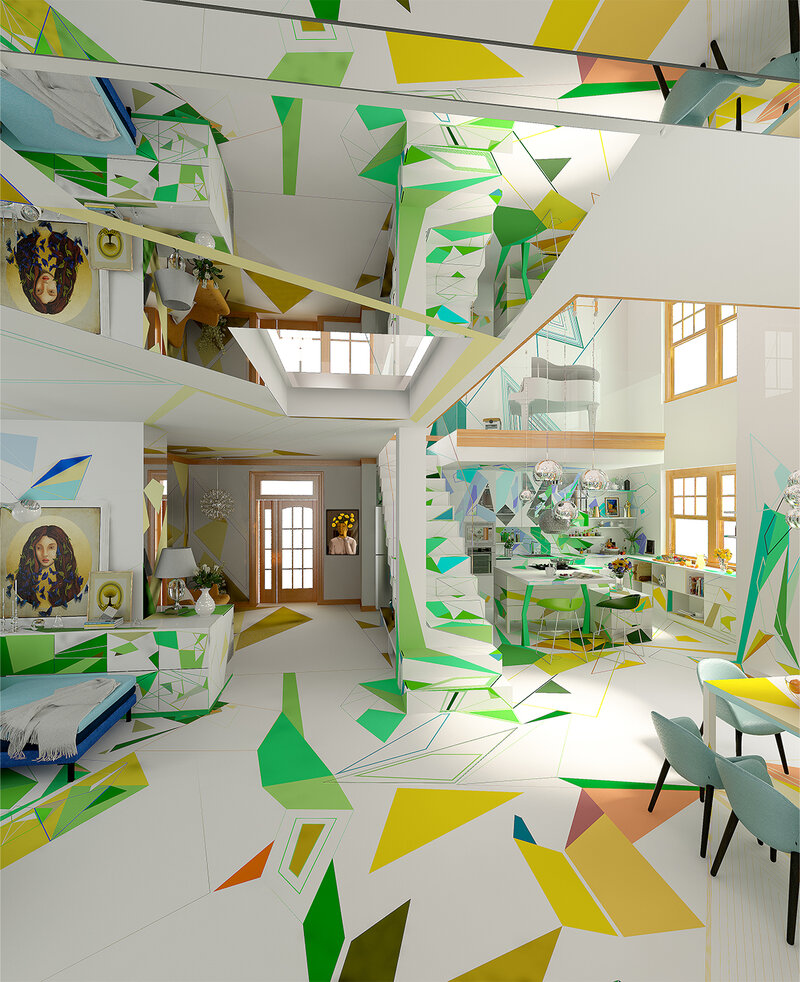
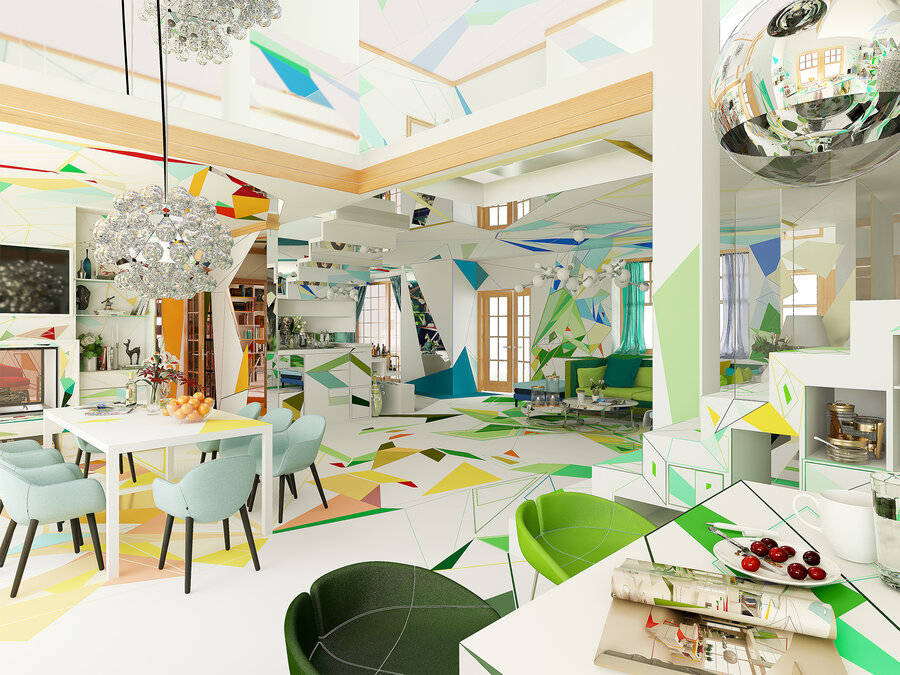
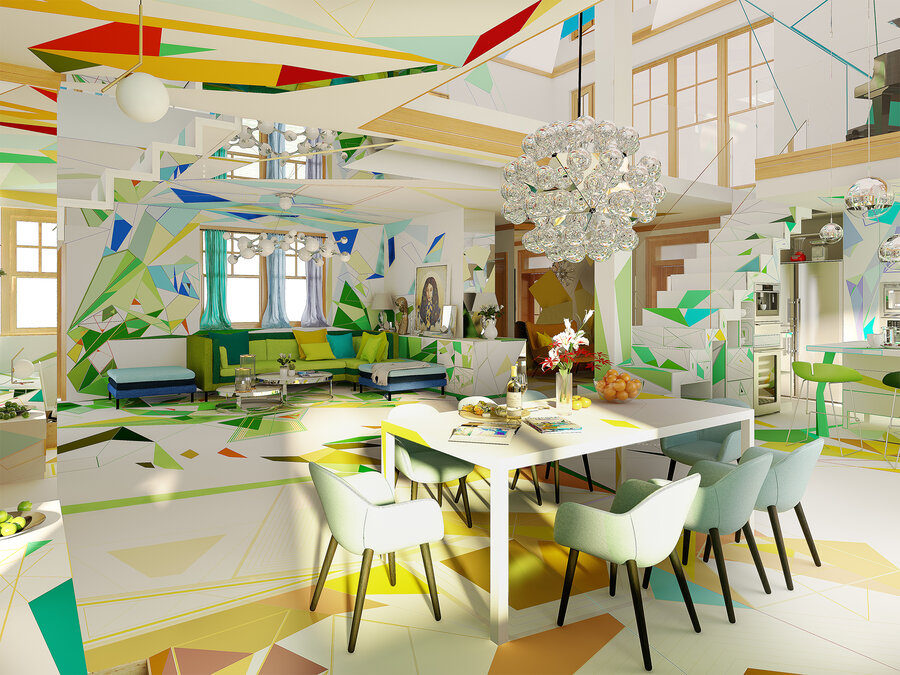
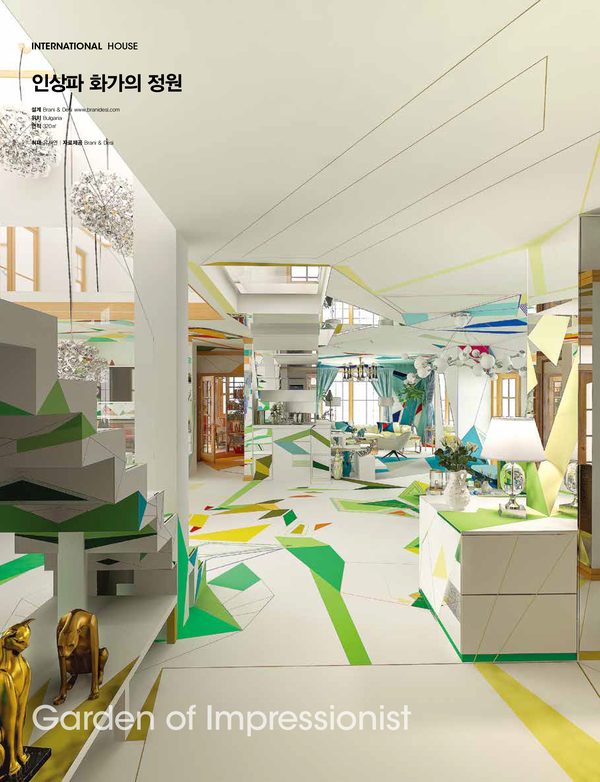
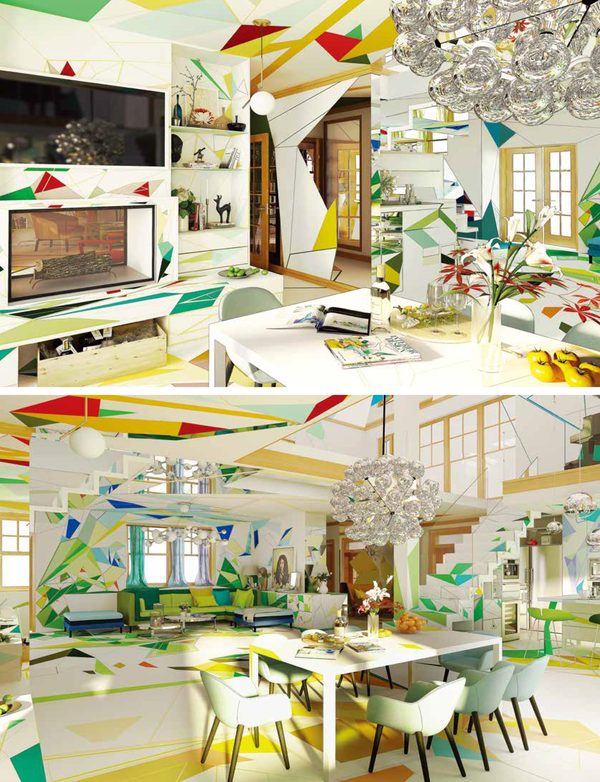
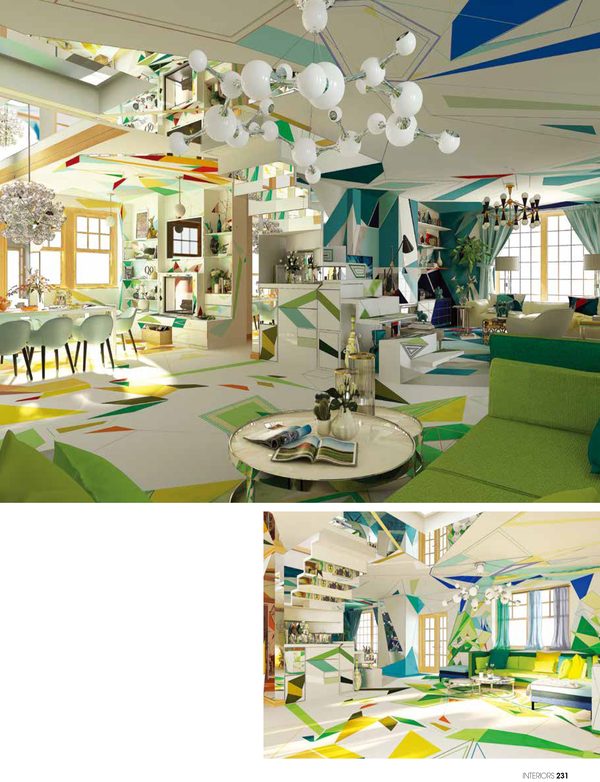
The house opens through a wooden door into a bright space where green and yellow shapes start on the floor and climb the walls. The kitchen island, stools and open shelves stay light, so the color carries the mood: green for freshness, yellow for sun.
Through Monet’s eyes. The kitchen at Giverny is lined with blue tiles and hung with copper pans. For Monet a working room was also a color. Here it is green and yellow.
Fresh
Sunlit
Welcoming
12:00
Noon · Level 1
Dining room
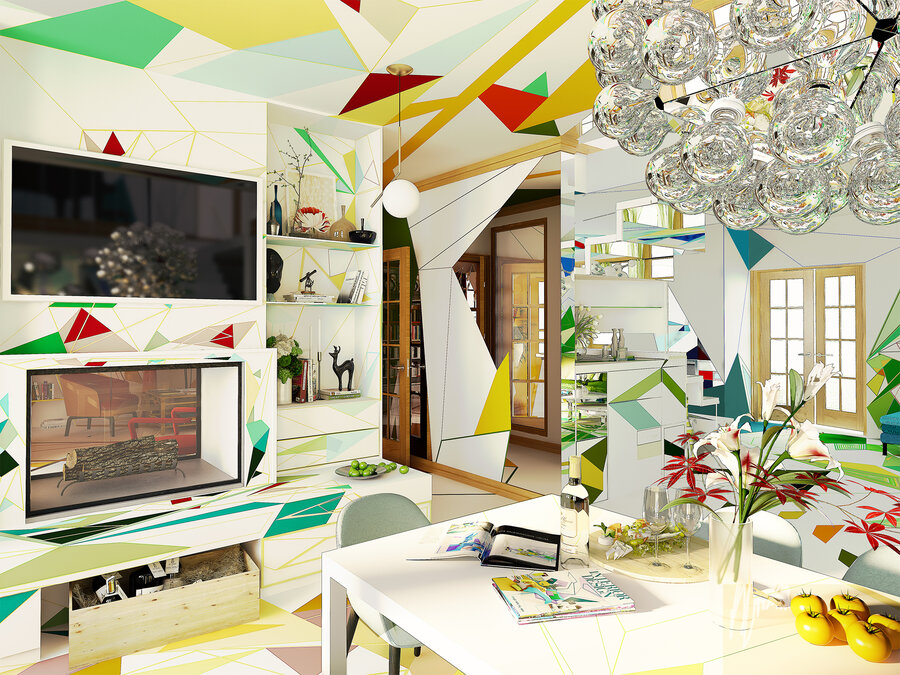
Noon. Lilies, glass, a fire behind glass.
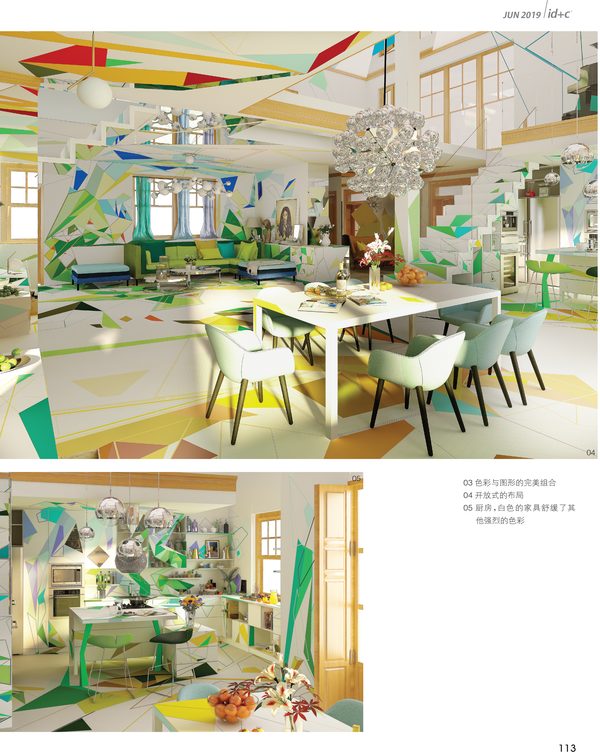
A table for conversation beside a see-through fireplace. Yellow, mint and green shapes run across the ceiling and the built-in shelves, with small red accents like the lilies on the table.
Through Monet’s eyes. Monet painted his own dining room yellow, and set a long table in it for a large household. Yellow is the same invitation here.
Conversation
Warmth
Gathering
16:00
Afternoon · Level 1
Two living rooms
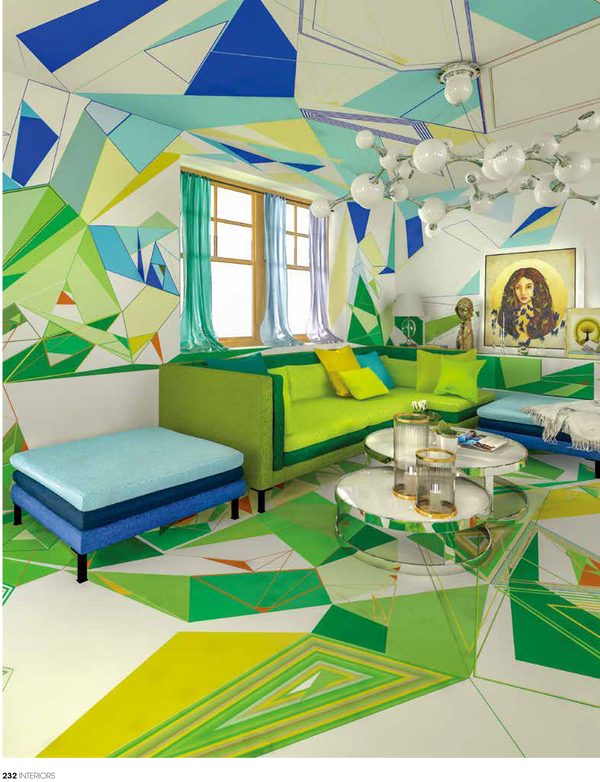
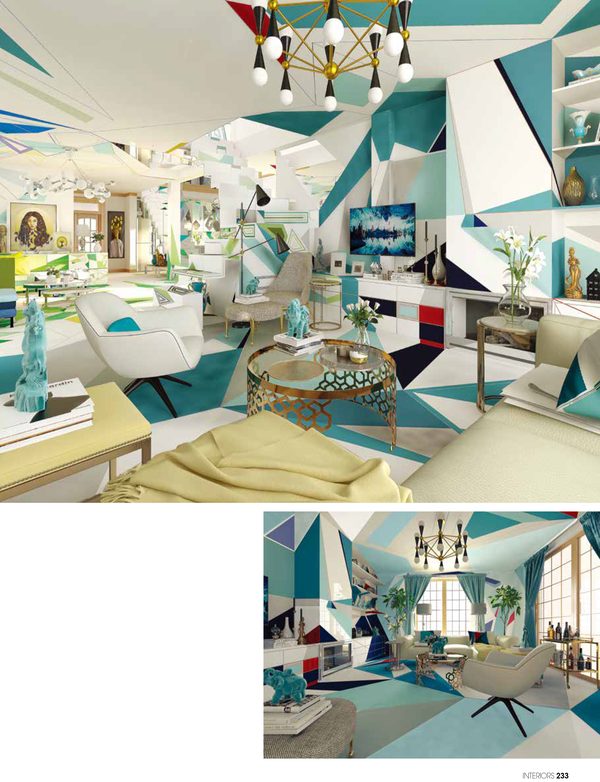
Lime, lilac, a curtain that moves.Teal on teal. Even the quiet is blue.
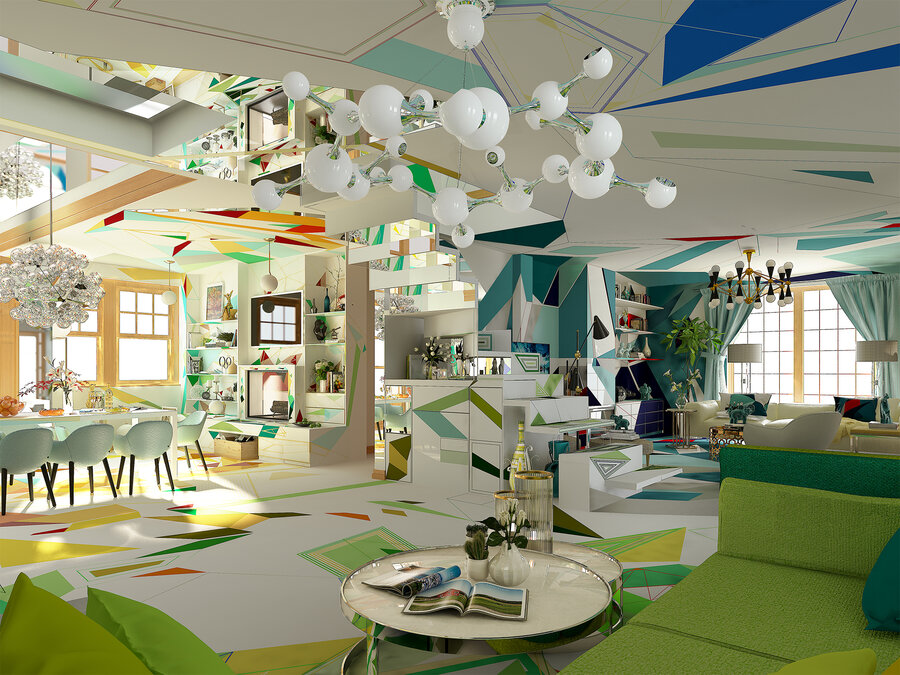
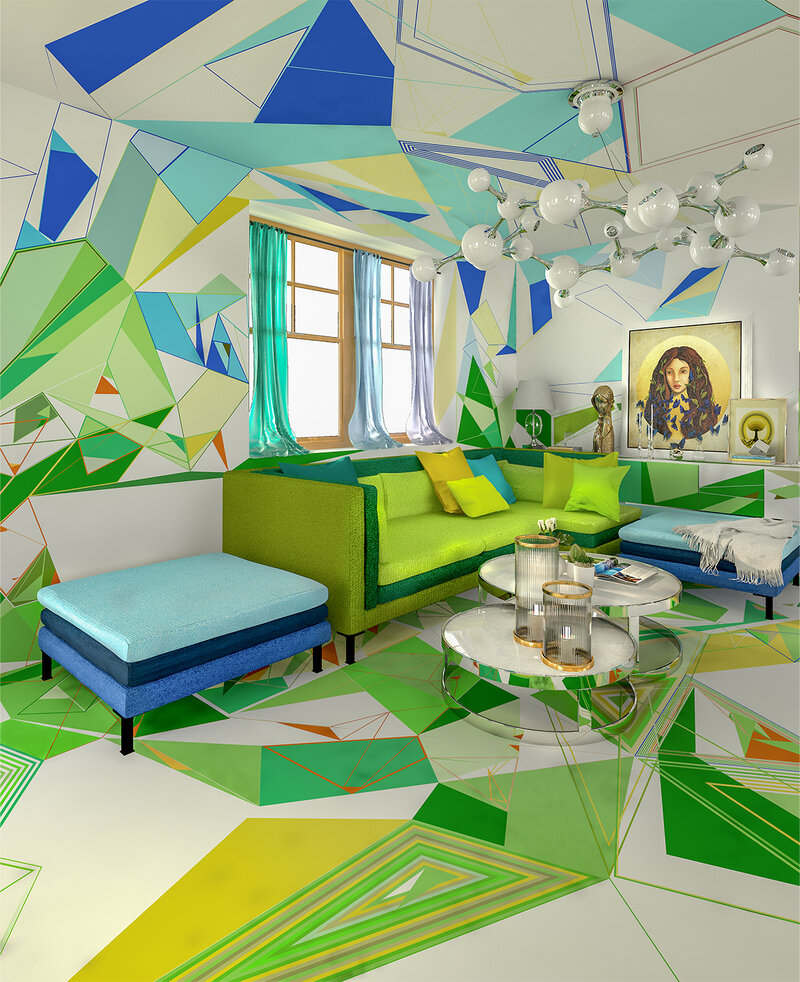
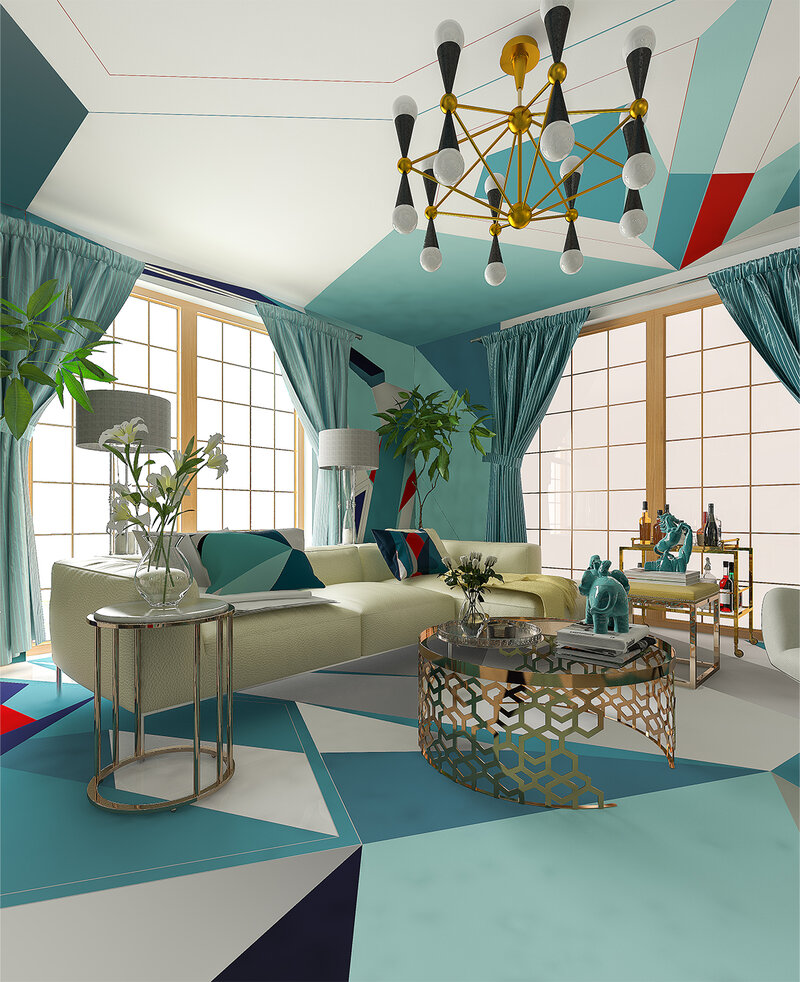
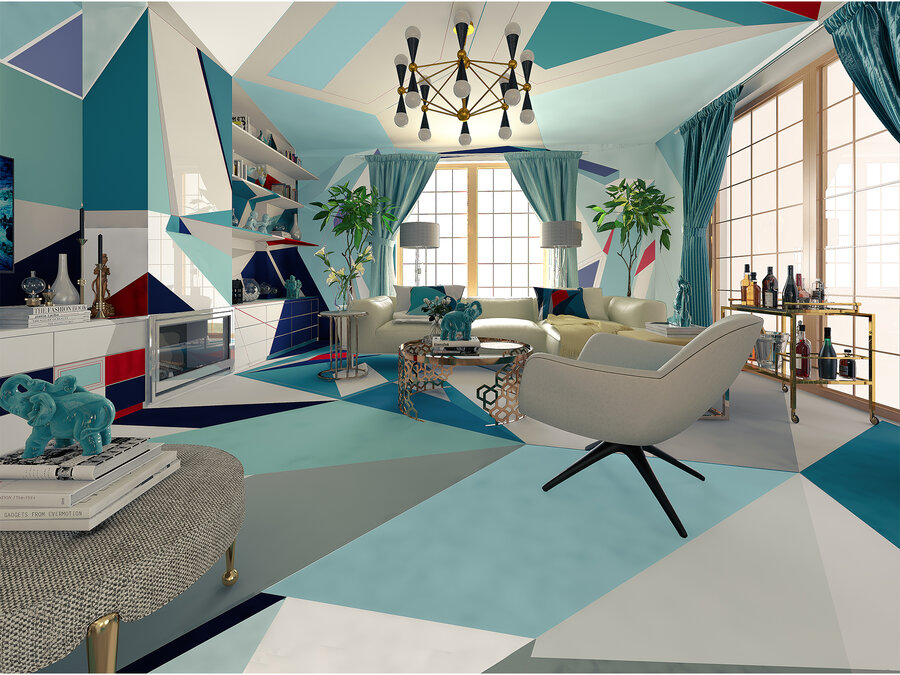
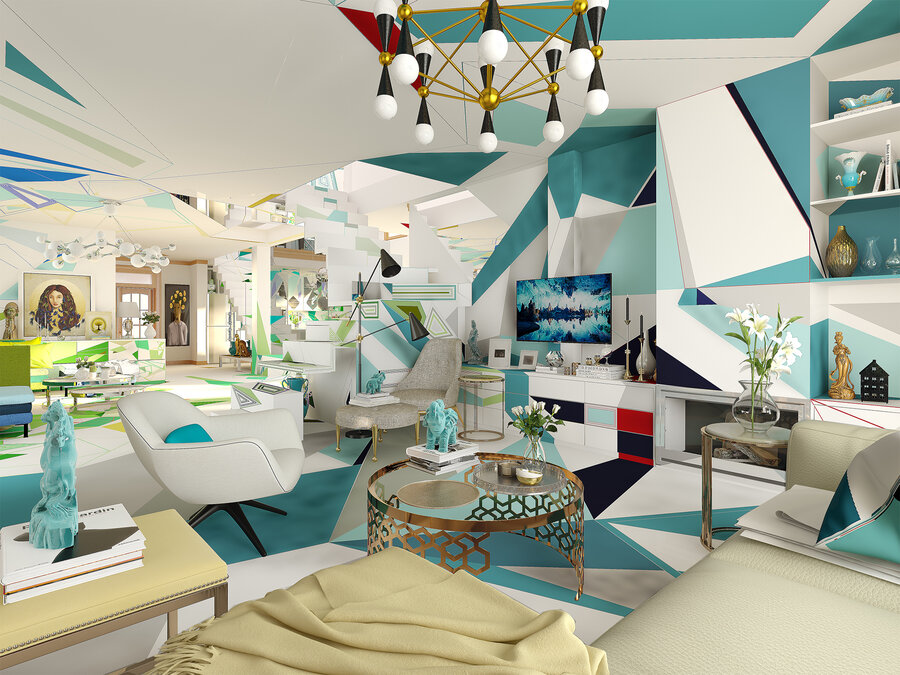
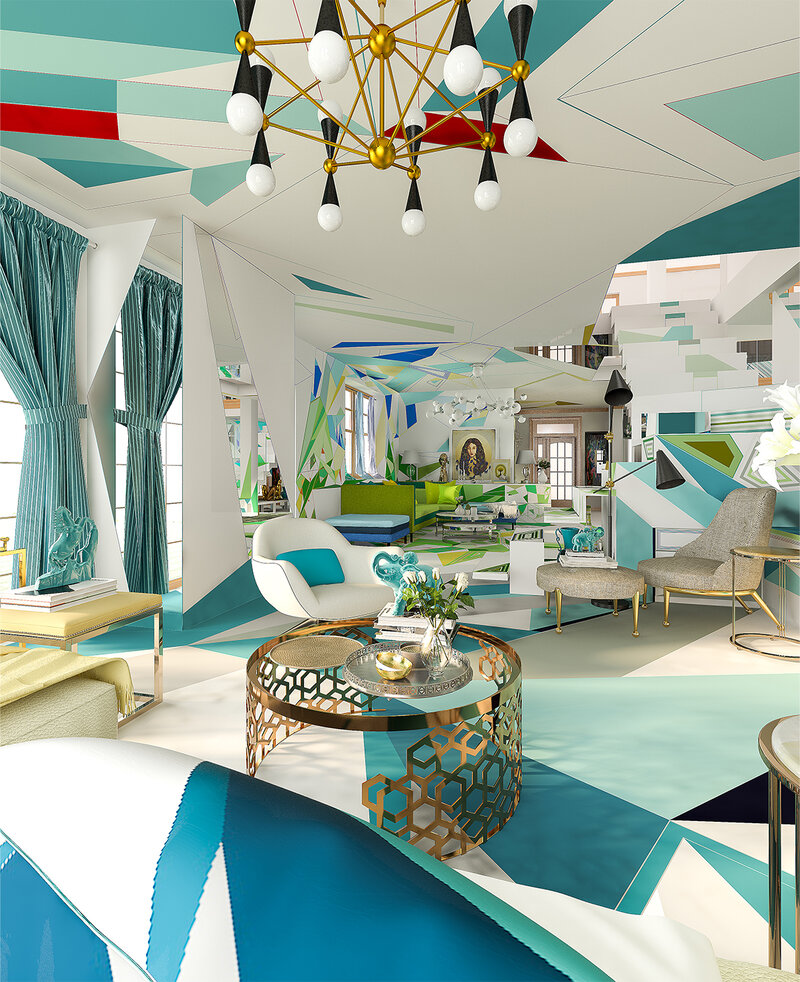
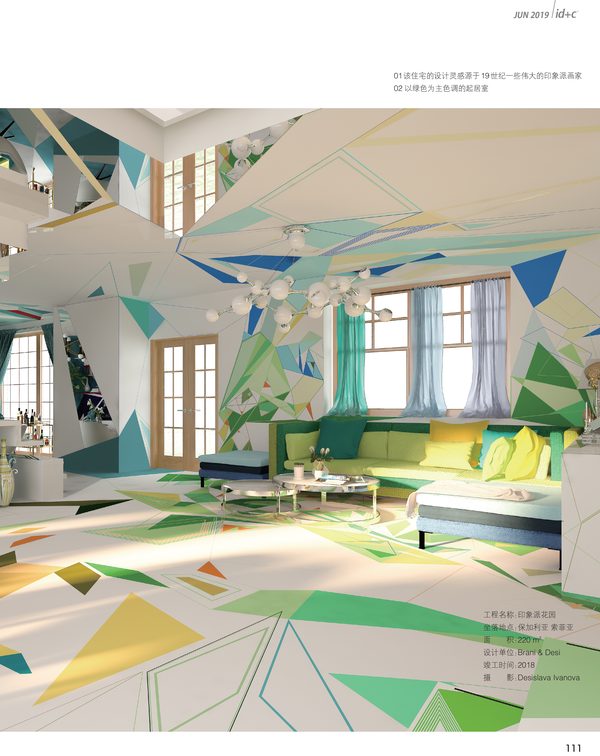
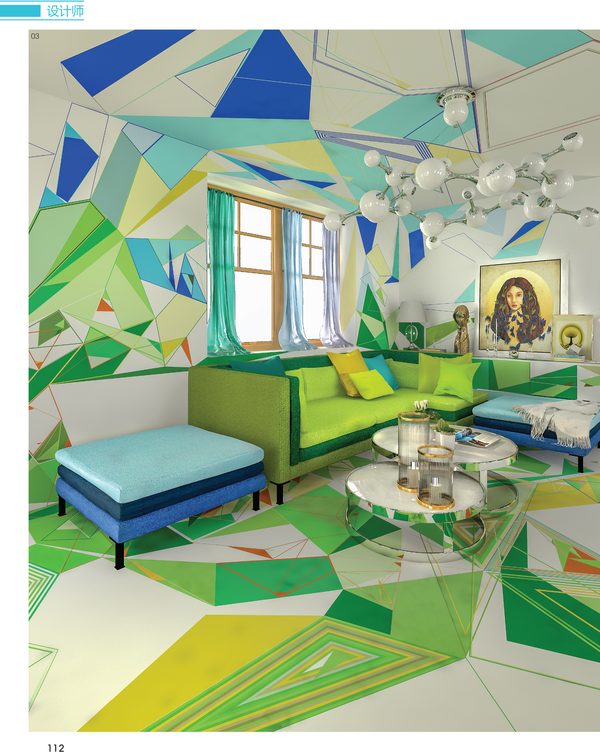
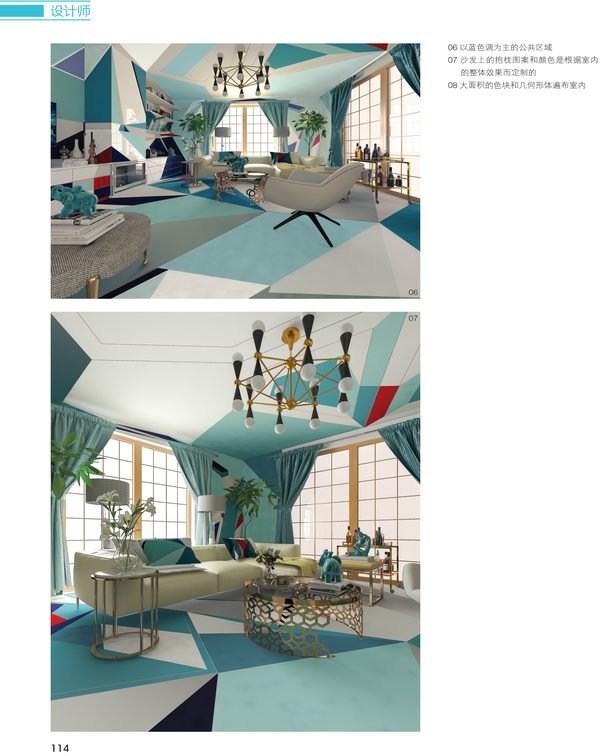
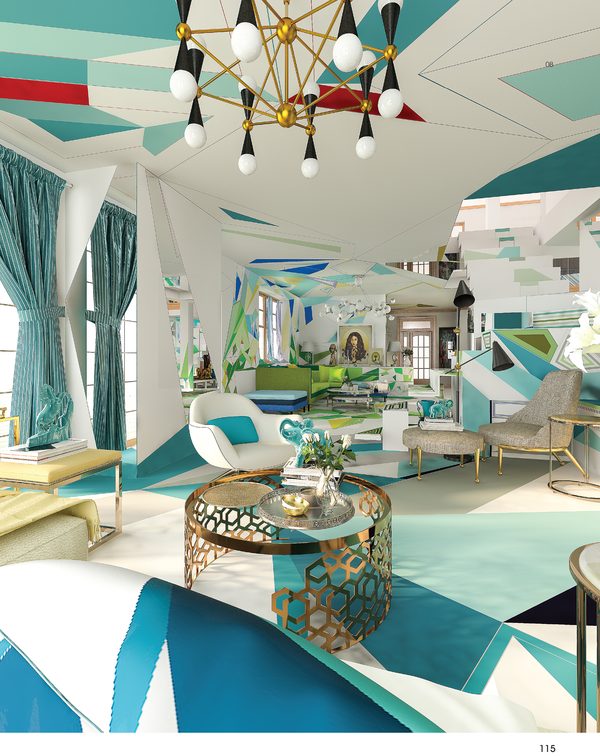
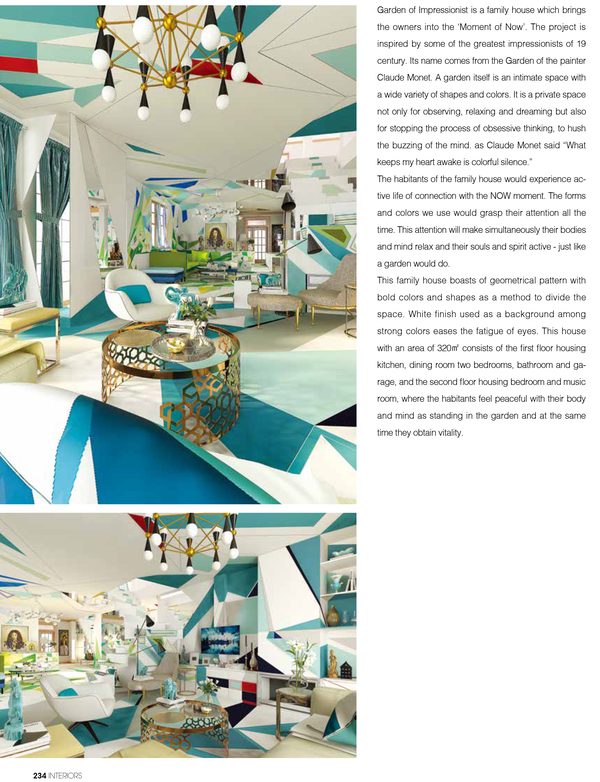
Living room 1 is the garden room: a lime-green sofa, yellow cushions and curtains in turquoise, pale blue and lilac, under green and blue shapes that spread across ceiling and floor. Living room 2 is the cool, quiet one: teal on every surface, a cream sofa, gold details and a few red notes.
Through Monet’s eyes. He painted his water lilies for years, until the pond was only light on a surface. Living room 2 does the same in teal.
Garden
Water
Calm
19:00
Dusk · Level 1
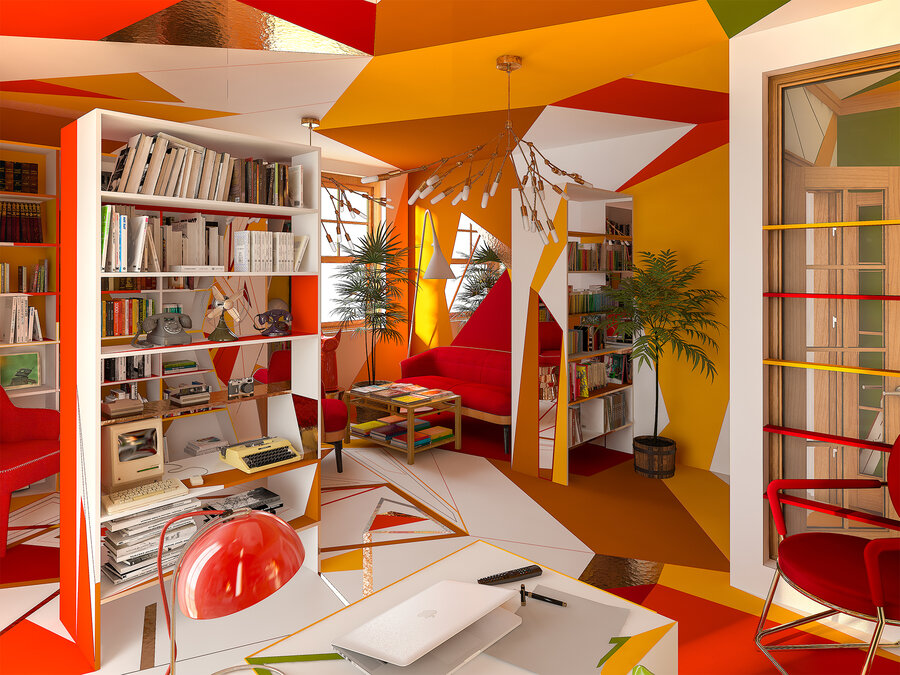
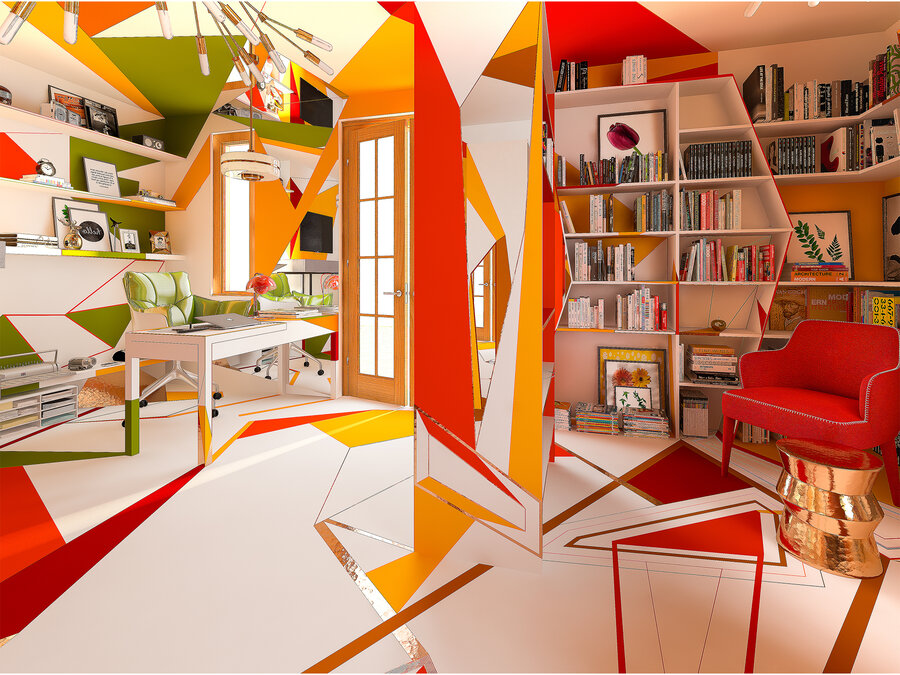
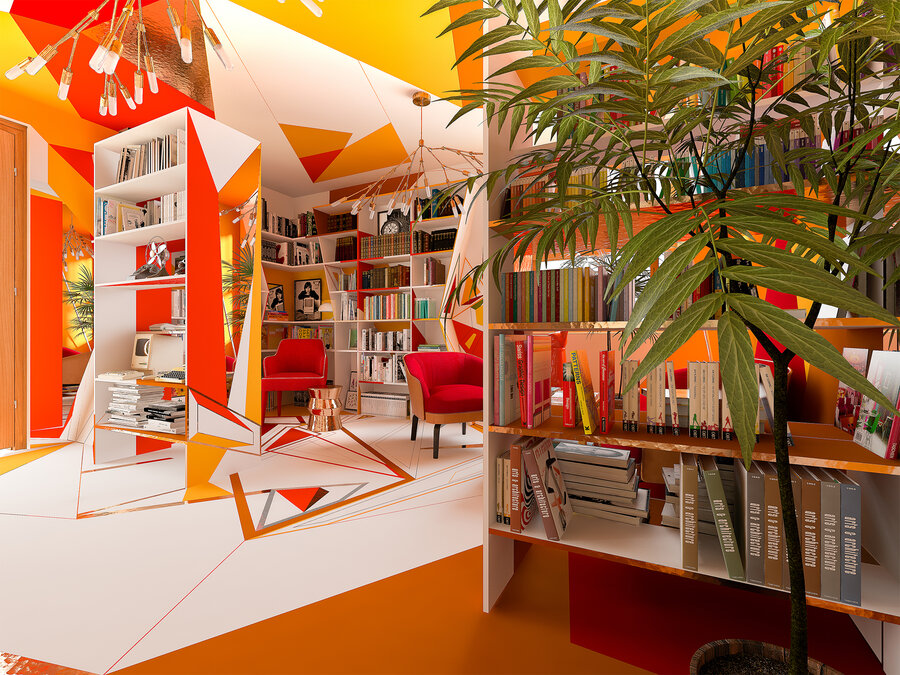
Library
Amber on the spines. Red at the edge of the eye.
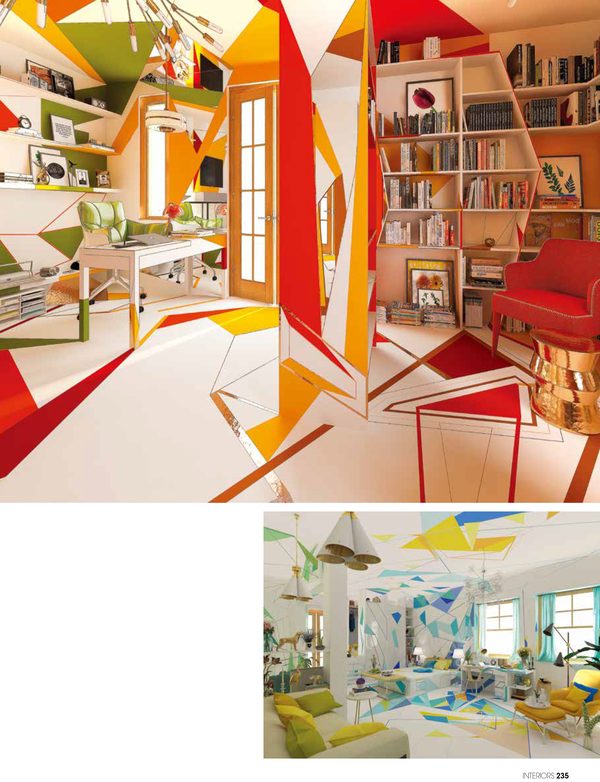
Orange, amber and red shapes wrap the shelves, the ceiling and the floor, with a red sofa set apart for reading. Old objects sit among the books: a typewriter, telephones, a camera.
Through Monet’s eyes. The late garden at Giverny burned orange and red. At dusk, the library is that garden.
Reading
Warmth
Focus
20:00
Bedtime · Level 2
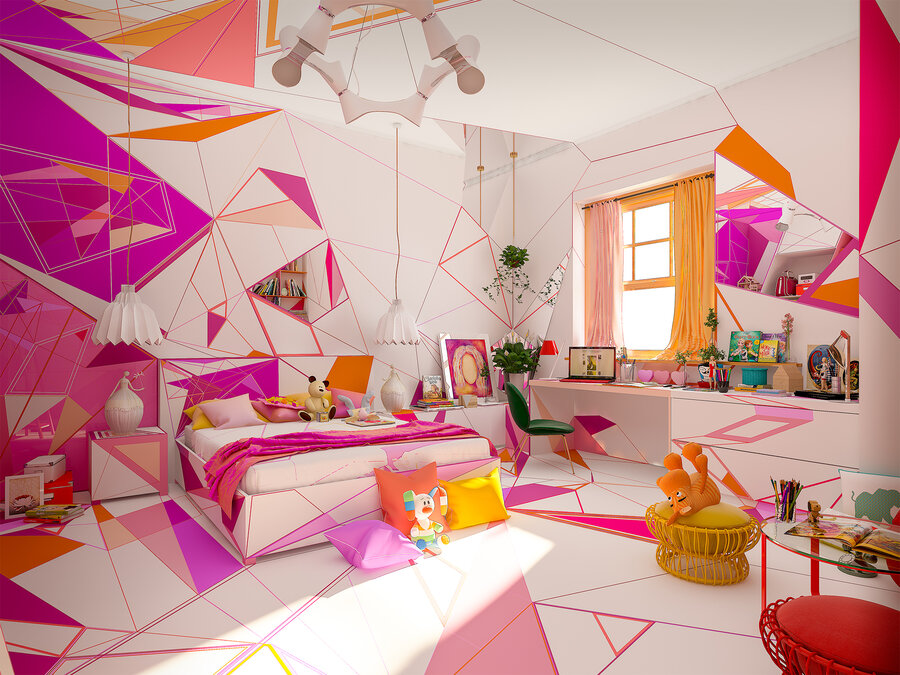
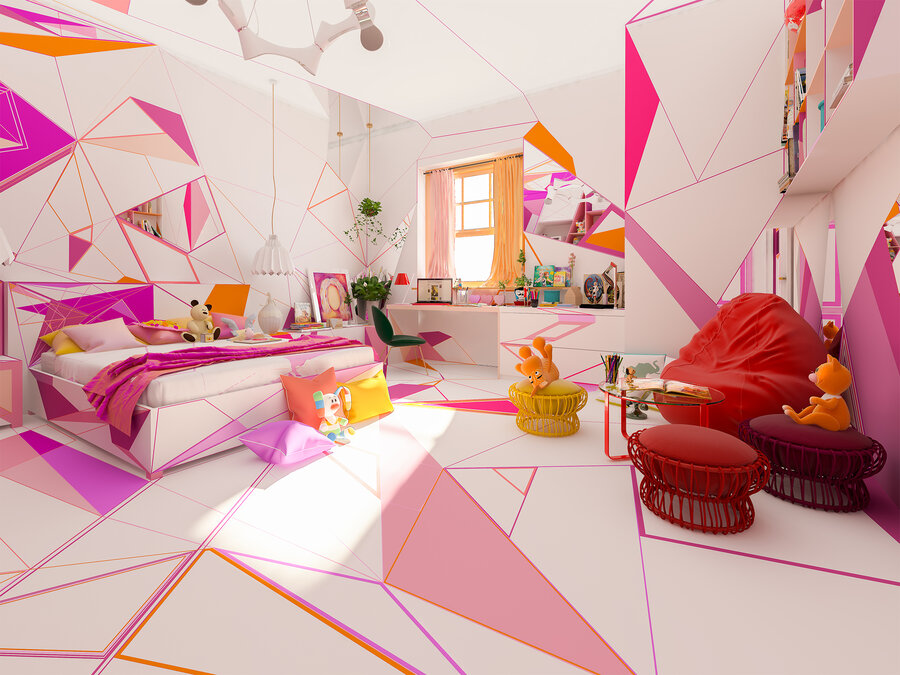
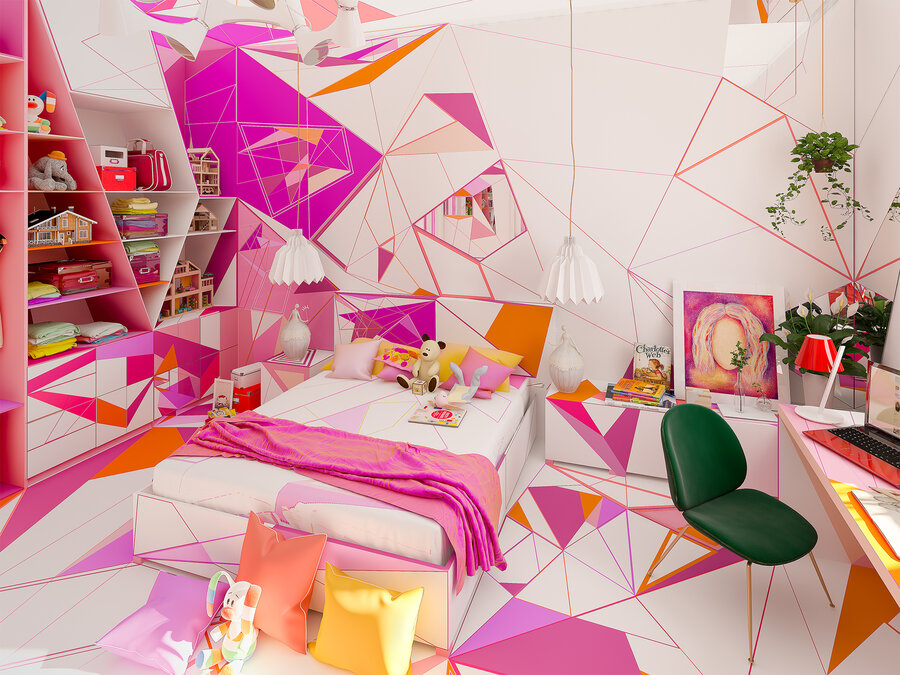
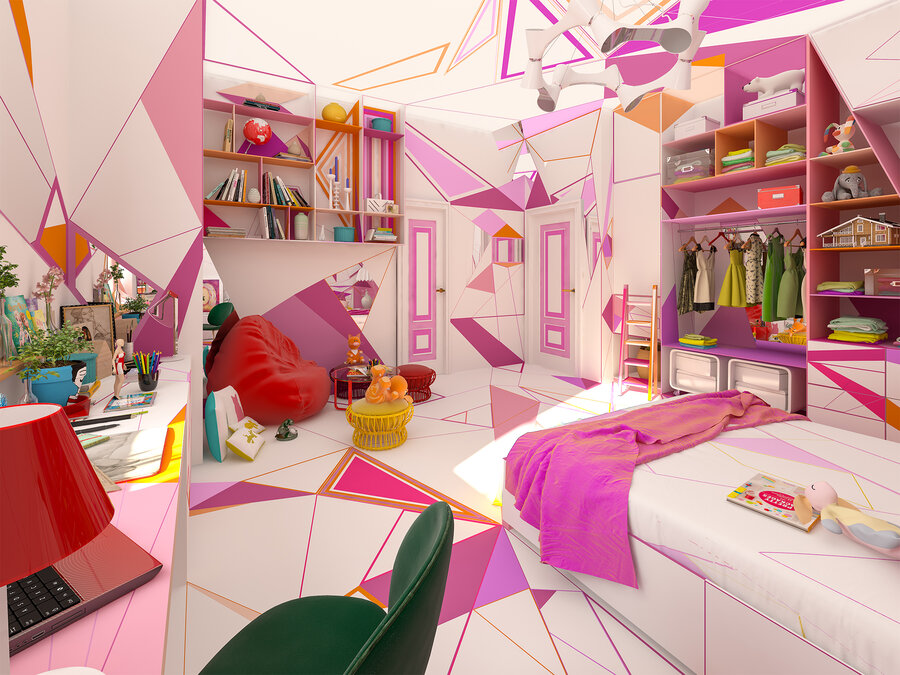
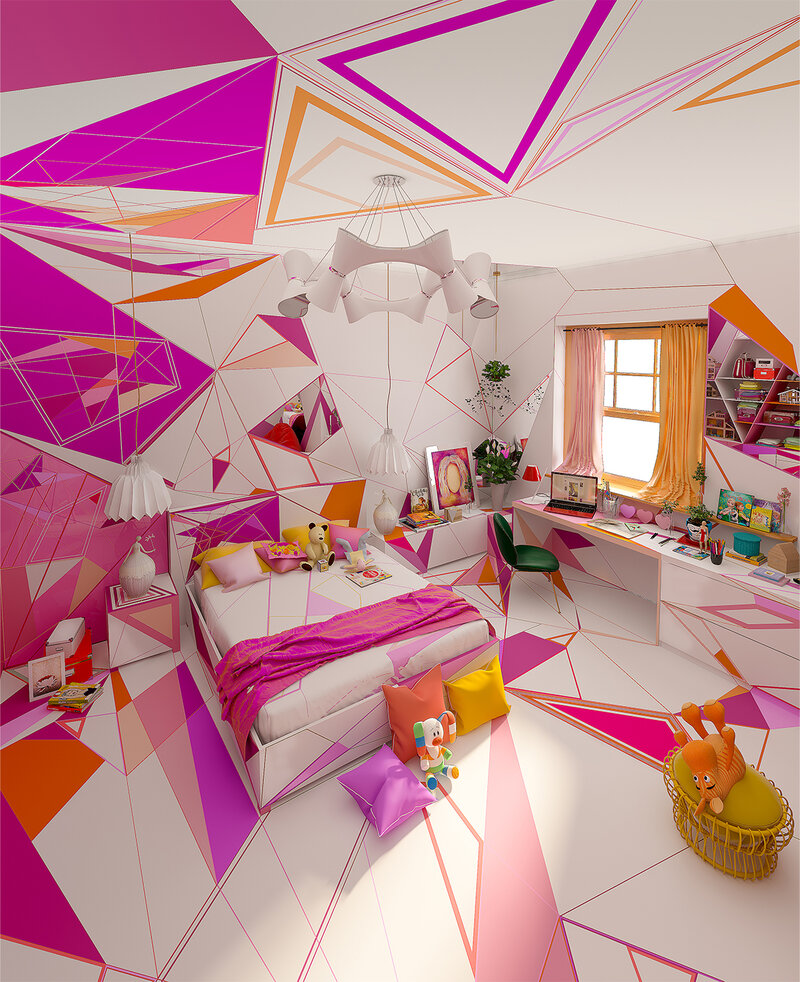
Girl’s bedroom
Pink, then magenta, then the orange of the curtain.Seen from above, it is almost a painting.
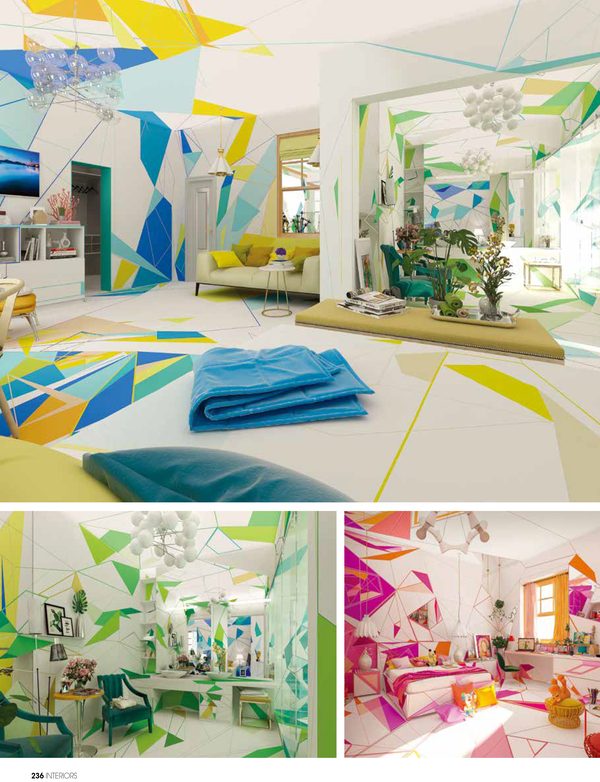
Pink, magenta and orange triangles cover walls, ceiling and floor. A wall of shelves holds dolls’ houses and toys, and a green chair waits at a desk by the window.
Through Monet’s eyes. The house at Giverny held eight children, two of Monet’s and six of Alice Hoschedé’s. A garden is the place where someone is always running.
Play
Imagination
Color
20:30
Story time · Level 2
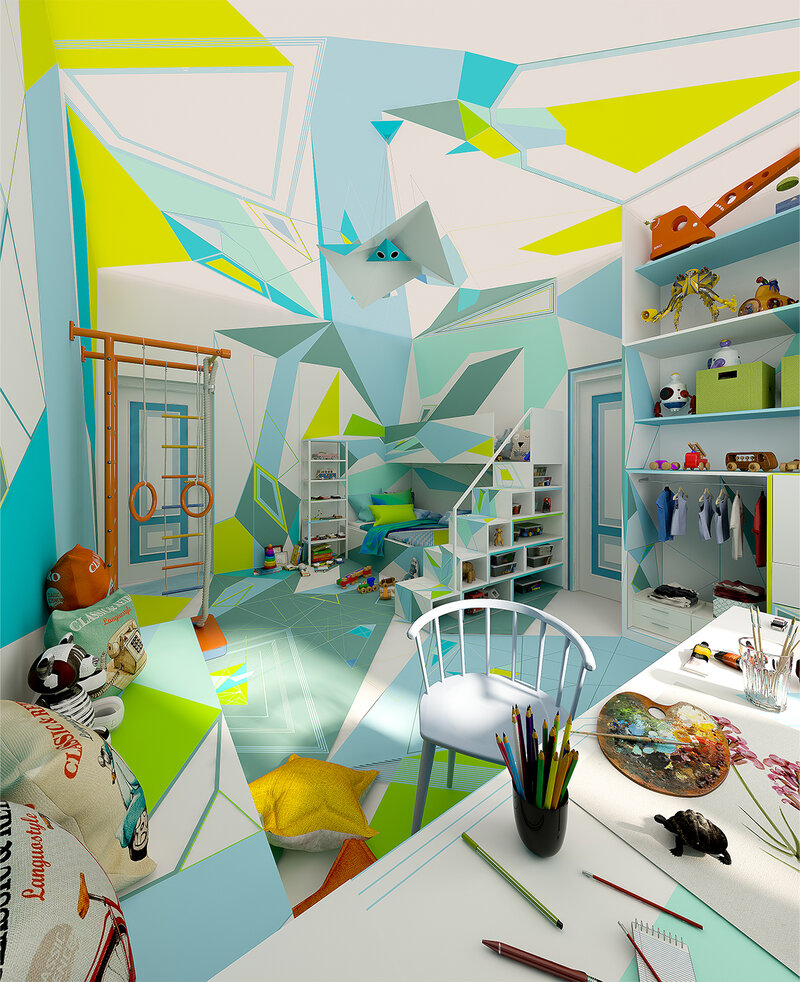
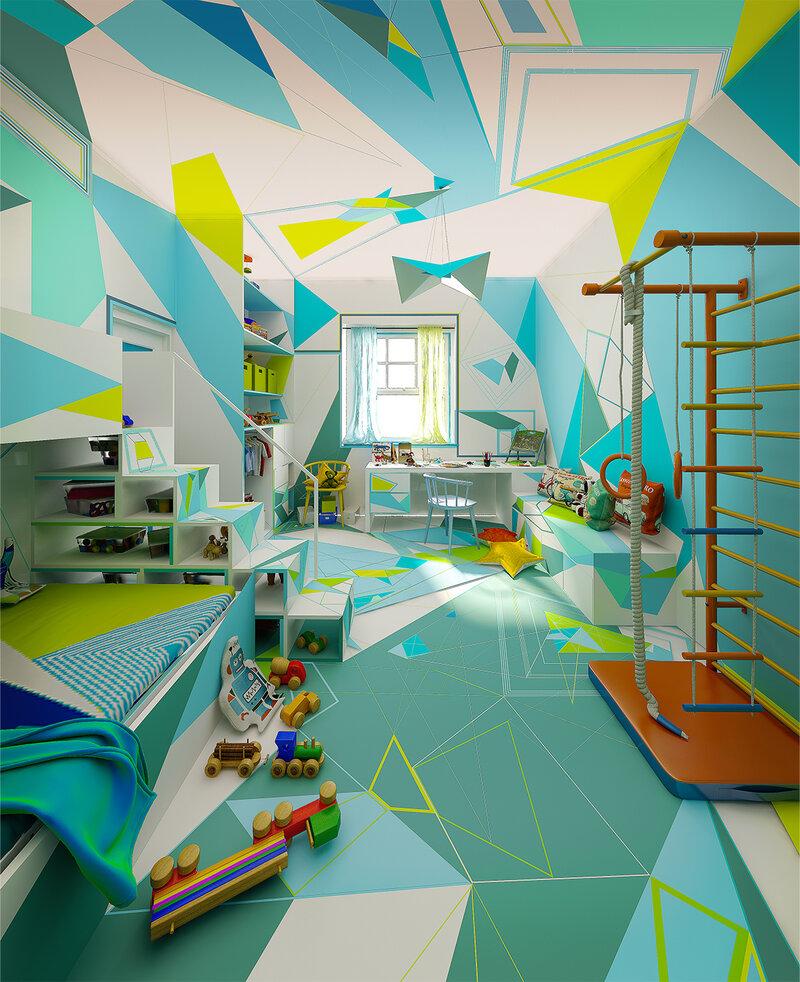
Boy’s room
A ladder, a rope. A bed like a boat.Pencils down. The boat waits.
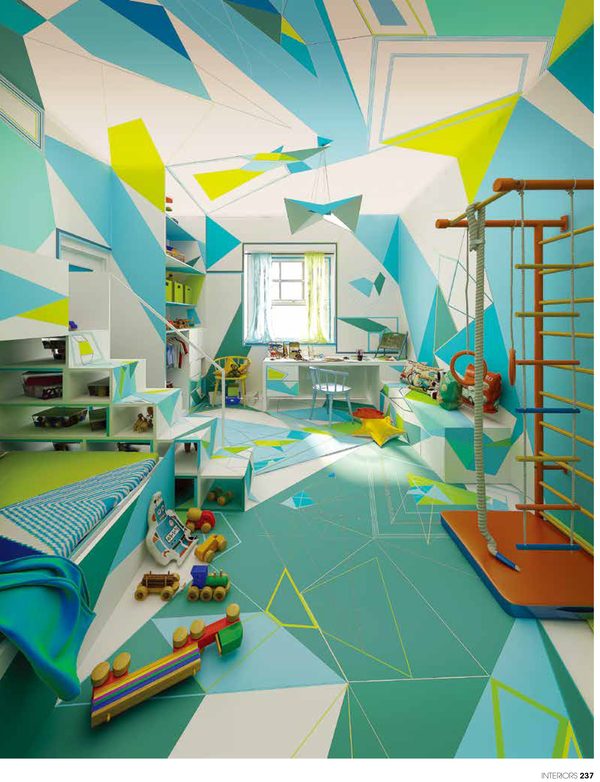
Turquoise and lime shapes meet a loft bed above a staircase with storage in every step. A desk by the window and a wall of ropes, rings and bars make the room a place for drawing and for climbing.
Through Monet’s eyes. His sons grew up inside the garden he was painting. This room lets a boy climb into one.
Play
Movement
Discovery
22:00
Night · Level 2
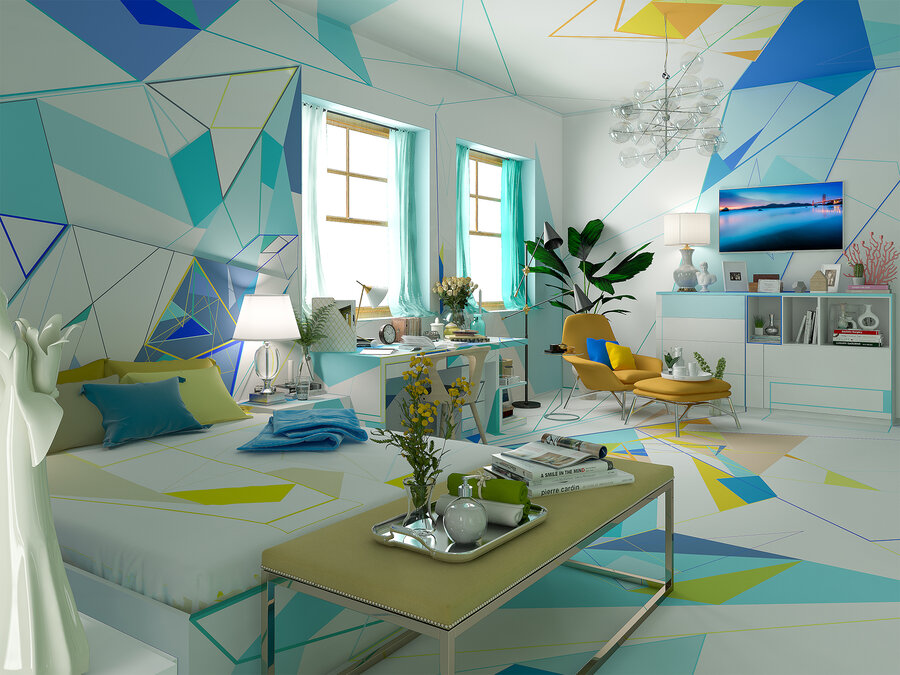
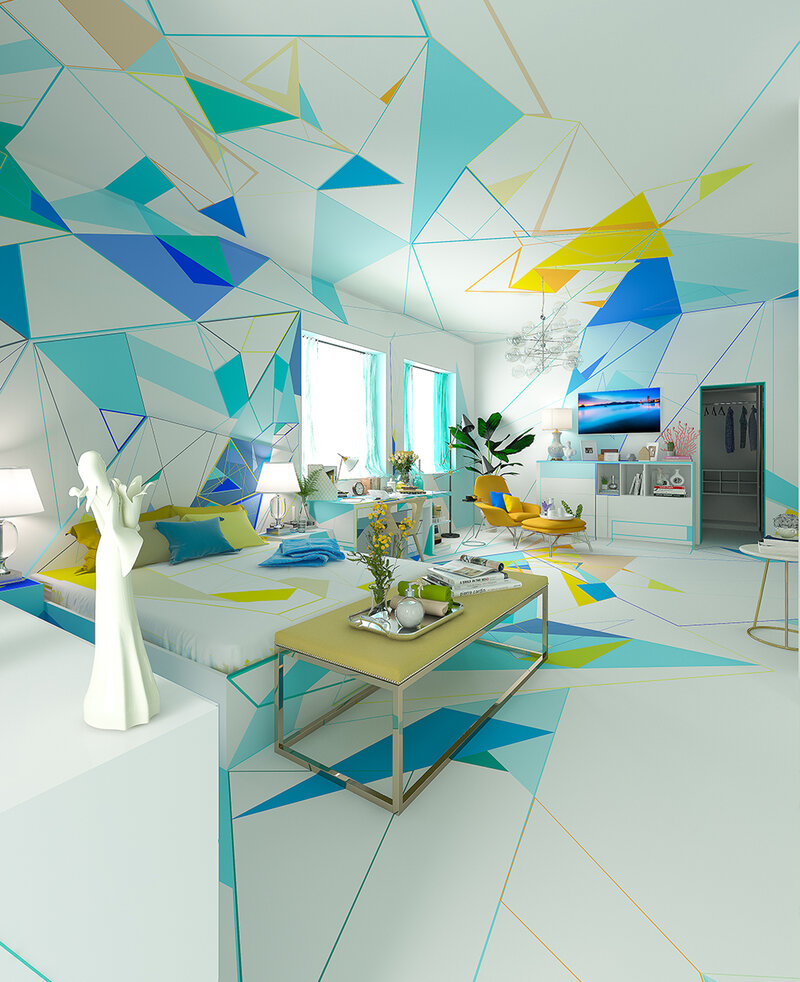
Master bedroom and bathroom
Blue closing over the room, slowly.The mirror keeps the day a little longer.
Blue and turquoise shapes cover the bedroom walls, with a mustard armchair and an olive bench for contrast. The bathroom turns green, behind a glass wall, with teal armchairs and a mirror that reflects the blue room.
Through Monet’s eyes. The other late garden was blue. At night, this room is that one, and nothing asks anything of you.
“Every night, depending on which color the light touched, that touch carried me into a dream made of its shades. They never repeated.”
What the house found, stated plainly. Each rule has its own address, so it can be cited.
Let white rest.White is the pause between two colors. It lets the eye recover before the next shape arrives.
Divide with color, not with walls.A bold shape that runs across floor, wall and ceiling marks a place without closing it.
Give every room its hour.Ask when the room is used, and paint that light: green for waking, yellow for noon, amber for dusk, blue for night.
Keep the real things real.Lilies, books, fruit and sunflowers are the only recognizable subjects. The color is there for them.
Let the eye blend.Do not match every color. Put them side by side and let the viewer mix them.
In print
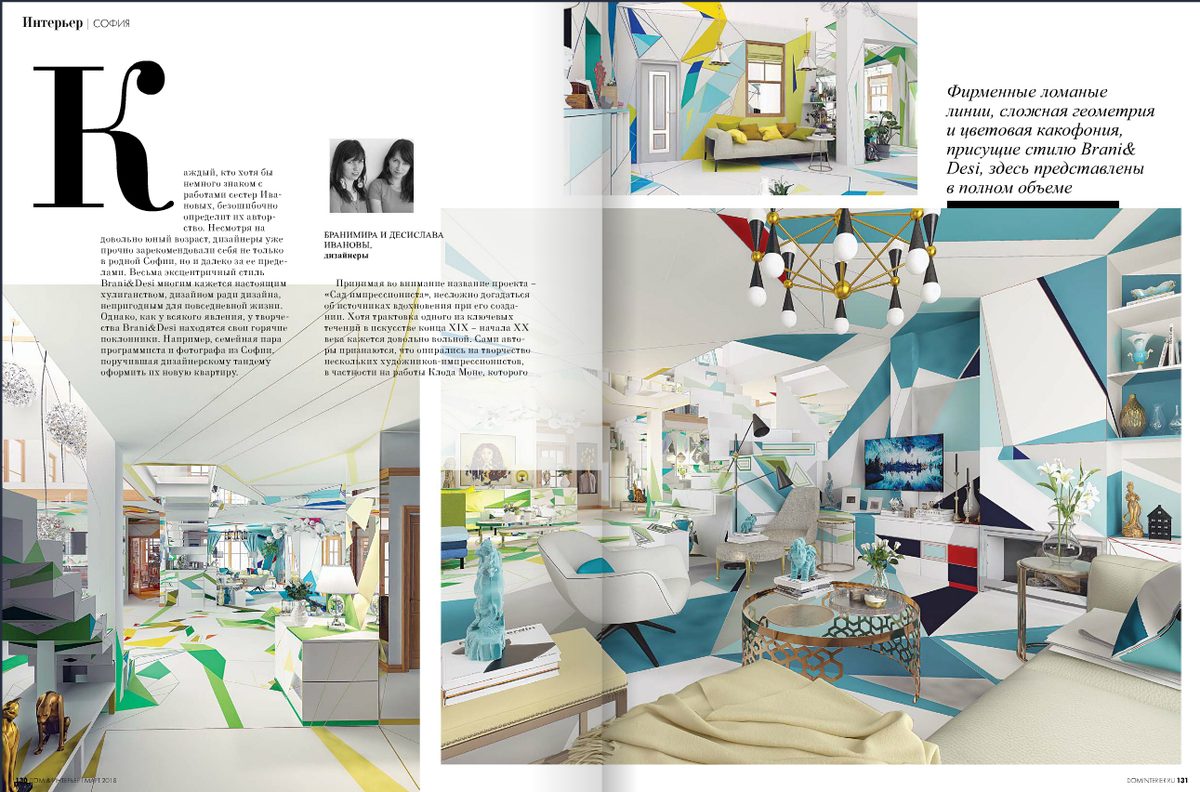
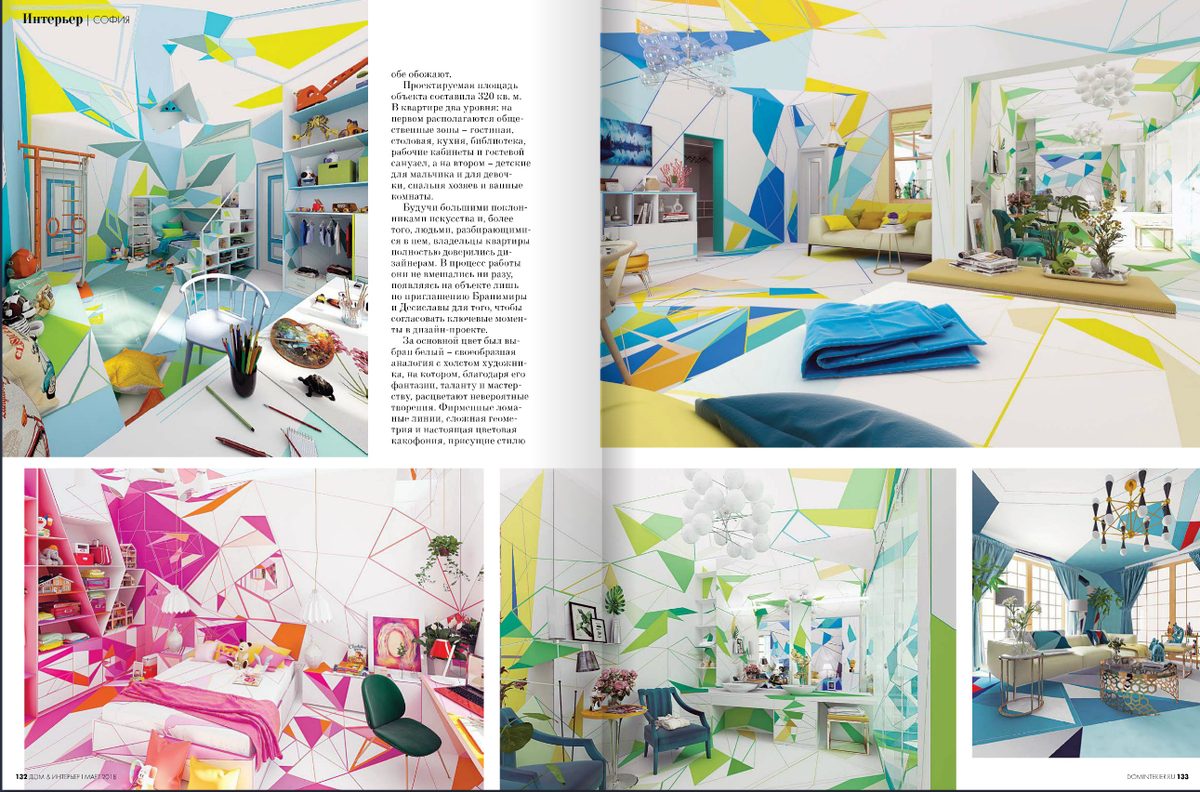
The project was published in three magazines. “Every room in this [house] is given its own shade: from soft blue to bright red,” wrote DOM & Interior.
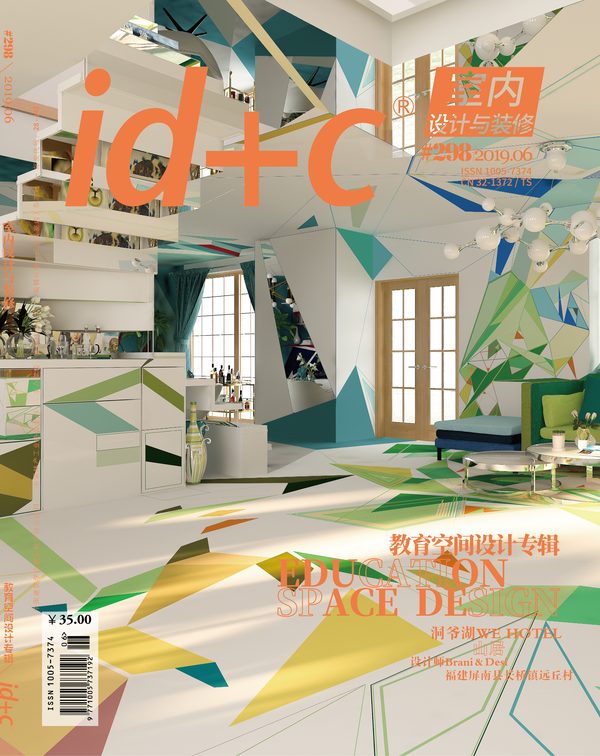
id+C No. 298, June 2019 · six pages
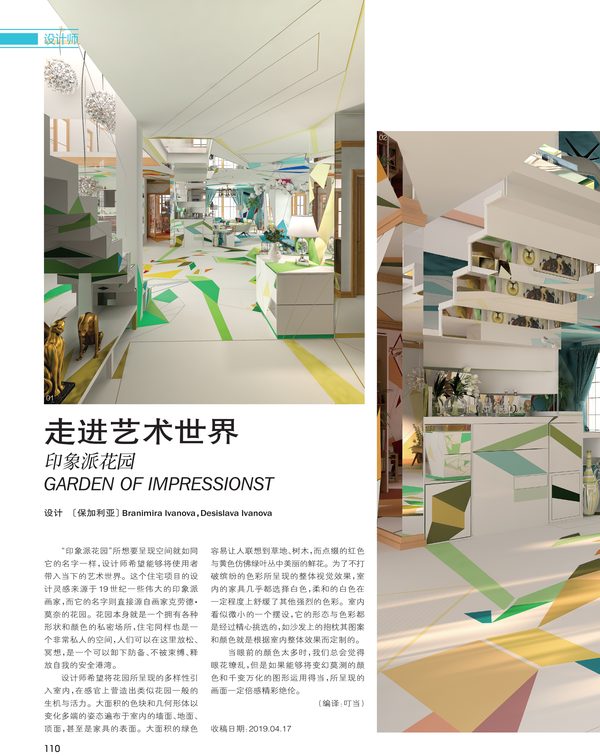
id+C, pages 110–111
id+C, pages 112–113
id+C, pages 114–115
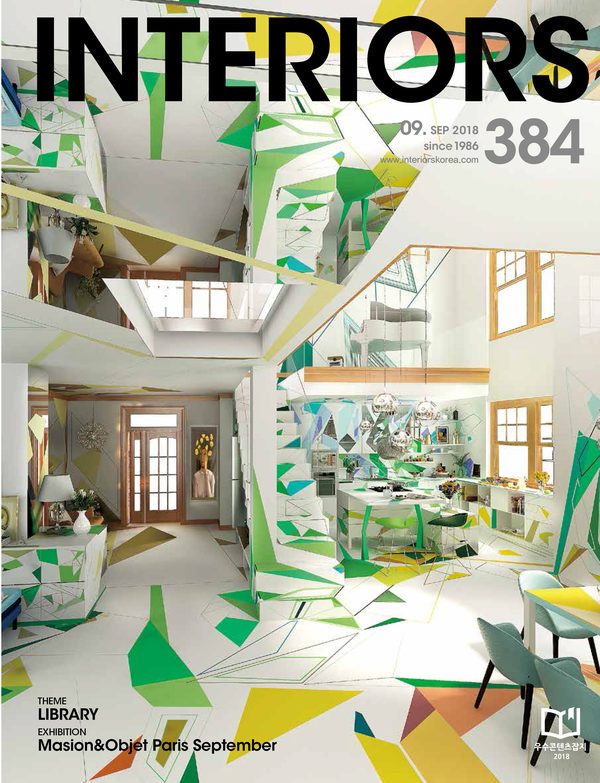
Interiors No. 384, September 2018 · ten pages
Interiors, pages 228–229
Interiors, pages 230–231
Interiors, pages 232–233
Interiors, pages 234–235
Interiors, pages 236–237
DOM & Interior No. 03, March 2018
DOM & Interior, pages 130–131DOM & Interior, pages 132–133DOM & Interior, the following page
On three magazine covers
The garden reached the cover of DOM & Interior in March 2018, of Interiors in September 2018, and of id+C in June 2019, each time through one of its rooms.
Garden of Impressionist has been on three magazine covers, but in no book. The questions it asks about color, form and the memory of rooms are the ones our books follow, in words instead of rooms. The one nearest to Impressionism as a feeling rather than as design is Arker and Former, a short tale in which light paints two pieces of furniture anew every day. Selected titles are also available in Bulgarian, German and Italian.
Olson, Donald W. Dating of Impression, Sunrise to 13 November 1872, 7:35 a.m. local mean time, in Monet’s Impression Sunrise: The Biography of a Painting, exhibition catalogue, Musée Marmottan Monet, Paris, 18 September 2014 – 18 January 2015. Summary: Texas State University, press release, 3 September 2014, news.txst.edu.
Leroy, Louis. “L’Exposition des impressionnistes.” Le Charivari, Paris, 25 April 1874.
Marmor, Michael F. “Ophthalmology and Art: Simulation of Monet’s Cataracts and Degas’ Retinal Disease.” Archives of Ophthalmology 124, no. 12 (2006): 1764–1769.
Wildenstein, Daniel. Monet or the Triumph of Impressionism. Cologne: Taschen, 1996.
Fondation Claude Monet, Giverny: the house and the gardens. fondation-monet.com.
Further reading
Chevreul, Michel Eugène. De la loi du contraste simultané des couleurs. Paris, 1839. The nineteenth-century source for how neighboring colors change each other.
Ravin, James G. “Monet’s Cataracts.” JAMA 254, no. 3 (1985): 394–399.
Cite this page
Brani & Desi (Branimira Ivanova and Desislava Ivanova). “Garden of Impressionist.” Interior of a two-level family house, 320 m², Bulgaria. branidesi.com. https://www.branidesi.com/works/interior/garden-of-impressionist.html.
Each hour and each rule has a permanent address: #r-entry, #r-dining, #r-living, #r-library, #r-girl, #r-boy, #r-master, and #rule-1 to #rule-5.